
A migraine is not just your normal headache.
It happens when the brain and nerves become overly sensitive and start sending too many pain signals. This can make people feel strong head pain, pressure, tiredness, and sensitivity to light and sound.
Inside the head, there is a large nerve system called the trigeminal nerve. During a migraine, this nerve can become overactive and create a "storm" of pain signals in the brain.
Modern neuroscience shows that migraine is not only about blood vessels — it is mainly about how the brain, nerves, and pain signals become unbalanced.
That's why migraine can affect the whole body and mind, not just the head.
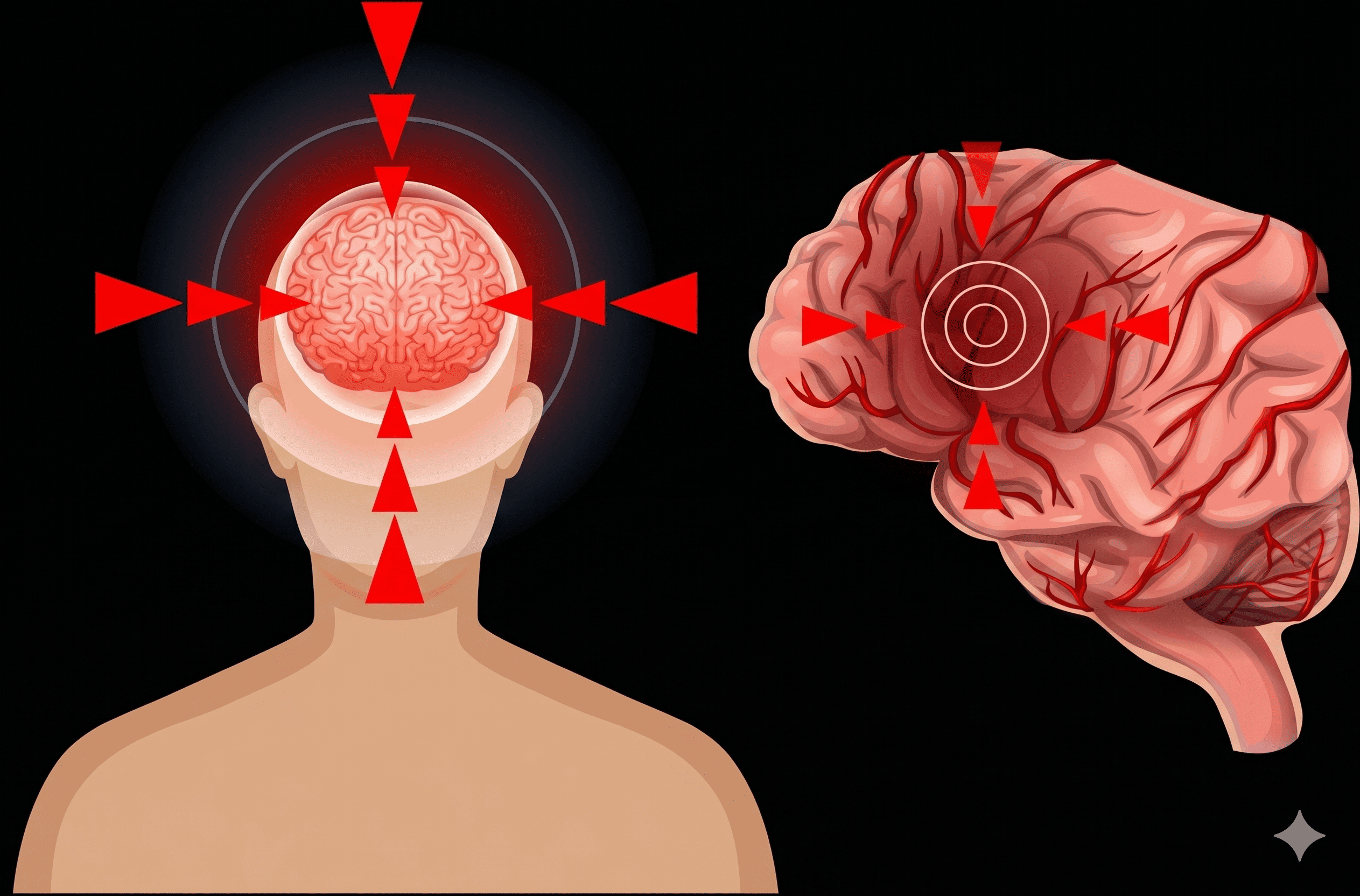
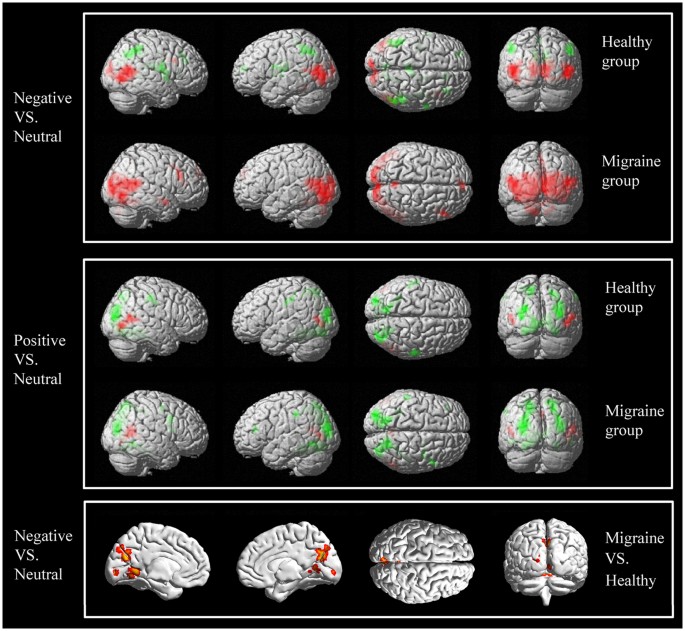
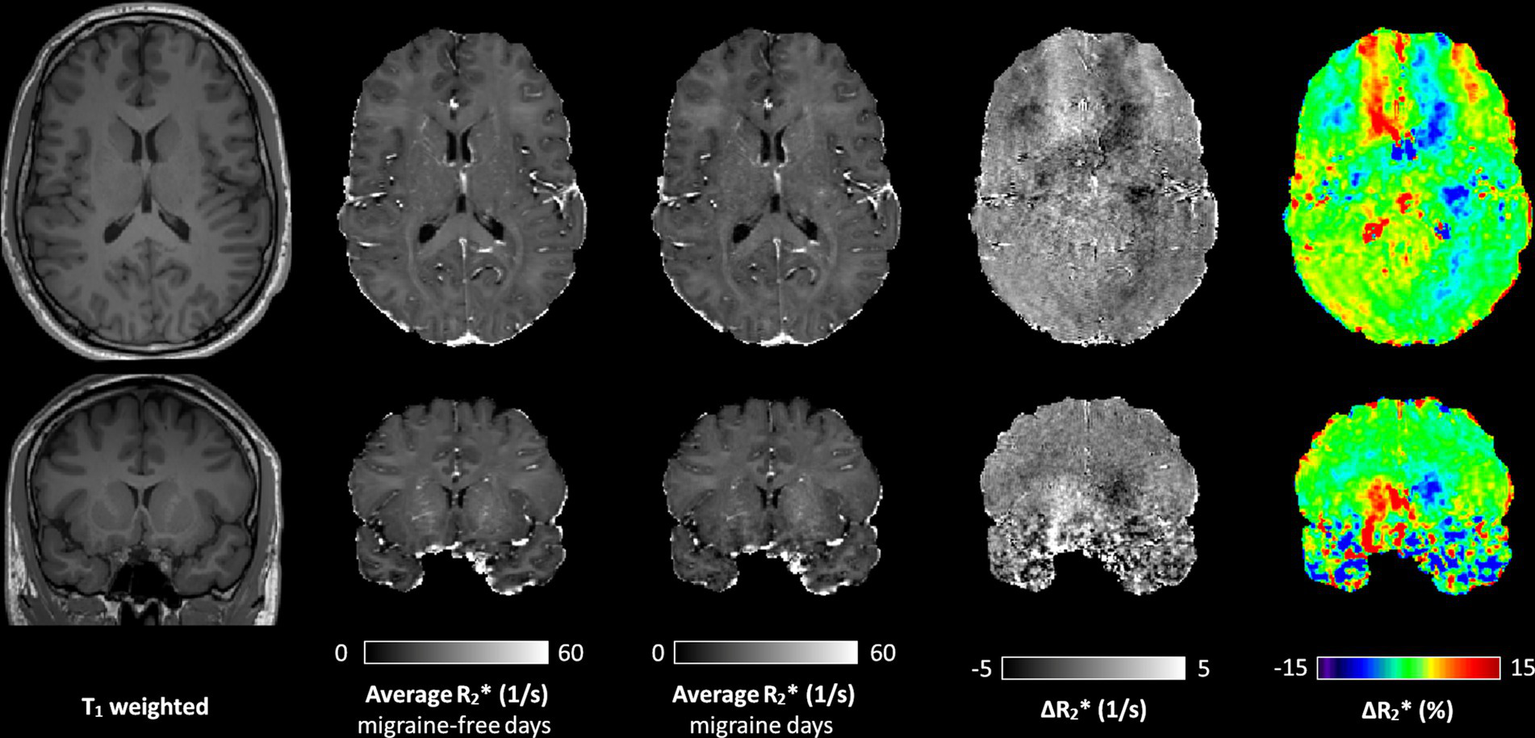
During a migraine, the trigeminal nerve becomes too active — like it's sending too many "pain messages" to the brain.
A "Pain Loop" Starts
When the trigeminal nerve gets overactive, it releases chemicals that make the pain stronger — and the brain becomes even more sensitive.
more signals → more chemicals → more pain → even more signals
The Brain Becomes Too Sensitive
Your brain starts acting like the volume is turned way too high. Things that are normally fine can suddenly feel overwhelming:
- Light feels too bright
- Sound feels too loud
- Even small touch can hurt
Sometimes You See Strange Things
Some people experience an "aura" before a migraine — a wave moving through the brain that can cause:
- Flashing lights
- Blurry vision
- Strange sensations
The Pain Control System Weakens
Your brain has a natural system to calm down pain. But in people with migraines, this system doesn't work properly — so pain signals are not stopped effectively.
Brain Chemistry Gets Unbalanced
Your brain uses tiny chemical messengers to control pain and mood. During a migraine, these chemicals become unbalanced — which can make pain worse and also cause tiredness, nausea, or mood changes.
Meet Pulsify.
How Pulsify Works
Migraine is linked to abnormal activity within the trigeminal nerve network and the brain’s pain-processing systems.
Pulsify uses controlled external neurostimulation to activate peripheral nerve pathways associated with conditioned pain modulation (CPM) — the brain’s natural mechanism for regulating pain perception.
This stimulation may help influence neural signaling involved in migraine discomfort and support neurotransmitter systems associated with pain regulation, including serotonin and norepinephrine pathways.
The goal is simple:
help the nervous system move from a state of overactivity to a state of calm.